You’ve done the 90-day tourist run. You’ve sat in a Tokyo café, watched the salary-men file past at 8am, and thought: I want more time here. The question isn’t whether Japan is worth staying in — it’s whether the official way to do it is worth the effort.
Japan’s Digital Nomad Visa (officially “Designated Activities — Remote Work”) launched in March 2024. Two years on, the picture is clear. The visa is real, legal, and genuinely useful — for a very specific type of person. For everyone else, it’s a lot of paperwork for limited upside.
Here is what I’ve found after going through the research, the real-world accounts, and the official documentation — the MOFA visa page (Japan’s Ministry of Foreign Affairs, which issues visas) and the ISA status-of-residence page (the Immigration Services Agency, which sets the residence rules). All requirements below were re-verified against those sources on July 21, 2026.
What You’re Actually Getting: “Super-Tourist” Status
The first thing to understand is the visa’s fundamental nature. Holding it does not grant you a Residence Card (在留カード, Zairyu Card). In Japanese bureaucracy terms, you are a long-term guest — not a resident.
That distinction matters more than it sounds. Without a Residence Card, you are locked out of the infrastructure that makes normal Japanese life work:
- No traditional bank account (MUFG, JP Bank, Japan Post — all require it)
- No standard mobile phone contract (Softbank, Docomo, au)
- No standard apartment lease with a Japanese landlord
The trade-off is real, though. You are not a tax resident, which means you owe Japan nothing on your foreign income, no national pension contributions, and no national health insurance premiums — provided your stay in any calendar year stays under 183 days and your income source is overseas.
If you can live with those constraints, the visa works. If you were imagining a half-year “soft landing” before converting to a work visa — it’s not that. There is no conversion path.
The Three Hard Requirements
There is no flexibility on any of these. Think of them as a checklist that either passes or fails before your application is even read.
1. The ¥10 Million Income Floor
You must demonstrate annual income of at least ¥10,000,000 JPY — roughly $65,000–$70,000 USD depending on the exchange rate at the time you apply. This must come from non-Japanese sources. Your employer or clients must be outside Japan, and your work must not compete with or provide services to Japanese companies.
Tax returns, bank statements, and employment contracts are all acceptable as evidence. The ISA’s official Q&A adds three nuances worth knowing: in principle it is your most recent year’s income that counts, but prospective income qualifies too — a new employment contract at the ¥10M level, or a promotion that puts you over the line going forward. If you are self-employed, the ISA assesses profit after expenses, not your gross contract or invoice value. And multiple income sources can be combined, as long as each is stable.
2. Private Health Insurance with a ¥10M Cover Floor
Japan’s National Health Insurance is not available to you on this visa. You need private international insurance that covers:
- Death, injury, and illness during your stay in Japan
- Medical treatment costs of at least ¥10,000,000 JPY (~$67,000 USD) for injury and illness
- Death coverage that includes repatriation of remains or a death benefit — the ISA Q&A sets no minimum amount for the death component, but it must be in the policy
- The entire duration of your stay
The MOFA website lists specific coverage wording requirements. Most standard travel insurance policies fall short. Providers that remote workers have reported successfully using include SafetyWing’s Nomad Insurance and World Nomads — but verify your specific policy meets the ¥10M floor and the MOFA wording before you buy. Getting this wrong is the most common point of failure.
3. Nationality — 51 Eligible Countries and Regions
You must be a citizen of one of 51 countries and regions (per the official ISA list, as of July 2026 — up from 49 at launch) that have both a visa-waiver arrangement and a tax treaty with Japan. This includes the US, UK, Canada, Australia, Germany, France, most of Europe, and — notably for readers of this site — Taiwan, Hong Kong, South Korea, and Singapore. If you’re in doubt, check the ISA list directly.
Spouses and dependents can accompany you and are eligible from an expanded list of countries on the same PDF (Designated Activities No. 54).
The Application Reality
No Certificate of Eligibility
One thing that trips people up: for almost every applicant, this visa does not go through a Certificate of Eligibility (COE). A COE route technically exists, but it requires a proxy in Japan to file on your behalf — and unlike a company hire, a digital nomad has no sponsoring employer there. The ISA’s own Q&A says it directly: if you are outside Japan, apply for the visa at the Japanese embassy or consulate where you live. You bring your documents, submit your application in person, and wait.
The Chicken-and-Egg Trap
Here is the part that catches almost everyone off guard. To submit your application, you typically need:
- Health insurance policy documents — purchased and active before submission
- Proof of accommodation — some consulates ask for a letter of intent or a confirmed booking
- Booked flights — some consulates want evidence of your intended arrival date
- Proof of income — tax returns (last 1–2 years), bank statements, or employment contract
- Statement of purpose — a plain-language description of what you’ll be doing for 6 months
You are committing to real costs before you have approval in hand. One applicant from Germany reported submitting everything and waiting 6 weeks for a decision — in that time they had purchased insurance and were holding a provisional apartment booking. Plan your timeline accordingly.
Typical processing time is 2–6 weeks, varying significantly by consulate. Some applicants in major cities report 2 weeks; others in less-active consulates have waited longer.
One More Thing: Re-entry
This is widely misunderstood — and the answer is better than most older guides (including an earlier version of this one) suggest. Per the ISA’s official Q&A (Q6), once you have entered Japan and hold the Designated Activities status, you can leave temporarily and come back: digital nomad visa holders departing with the intention to return may use a re-entry permit or deemed re-entry permission (みなし再入国許可) — the same mechanism mid- to long-term residents use — as long as they return before their period of stay expires.
In practice: tell the immigration officer you intend to return when you depart, and don’t assume it’s automatic — since you have no Residence Card, carry your passport with the visa and landing sticker, and if your travel plans are important, confirm the procedure with an immigration office before booking. A weekend in Seoul is possible; a casual exit without the re-entry step could still cost you the status.
The visa cannot be extended and cannot be converted to another status while in Japan. After it expires, you must spend 6 months outside Japan before you can reapply.
Life Without a Residence Card
Once you’re in, the practical workarounds are manageable — but you need to set them up in the right order.
Connectivity First
Data-only eSIMs (Airalo, etc.) work fine for maps and browsing, but they do not give you a Japanese phone number. Without an 080/090 number you cannot book many restaurants, verify local apps, or receive SMS codes from Japanese services.
Carriers that issue real Japanese numbers without a Residence Card: Mobal, Hanacell, and Sakura Mobile (though Sakura’s eligibility for DNV holders has varied — confirm directly before you order). Pick up a SIM at the airport on arrival.
Housing Options
A standard Japanese apartment lease requires a 2-year contract, a Japanese guarantor, and key money. None of that is available to you. Your realistic options:
| Option | Cost (Tokyo) | Pros | Cons |
|---|---|---|---|
| Sharehouse (HMLET, Social Apartment) | ¥80,000–¥120,000/mo | Flexible terms, community | Shared facilities |
| Monthly Mansion | ¥130,000–¥200,000/mo | Private, furnished | Cleaning fees, expensive |
| UR Housing | ¥70,000–¥110,000/mo | No key money, no guarantor | Availability hit-or-miss |
| Guesthouse / Extended hostel | ¥60,000–¥90,000/mo | Zero commitment | Very limited space |
One thing to watch: short-term rental platforms often show a “monthly” price that is actually the annual-contract rate. Always ask agencies for the final total including cleaning fees before committing.
Banking
Don’t attempt to open a Japanese bank account. You will be rejected. Use Wise or Revolut for transfers and everyday spending. For cash: 7-Eleven ATMs accept almost all foreign cards and run 24/7. If you carry a Mastercard, withdrawals are free. Visa cards work too, though the fee structure varies. Aeon bank ATMs (found in Aeon supermarkets and their affiliated brands like MaxValu and Marunaka) are another solid option for Visa cardholders.
Japan is less cash-heavy than its reputation suggests in tourist areas and major chains. But local izakayas, small restaurants, and train station ticket machines (outside IC card top-ups) still often require cash. Having ¥10,000–¥20,000 on hand at all times is still good practice.
City Cost Breakdown: Tokyo Is Not Your Only Option
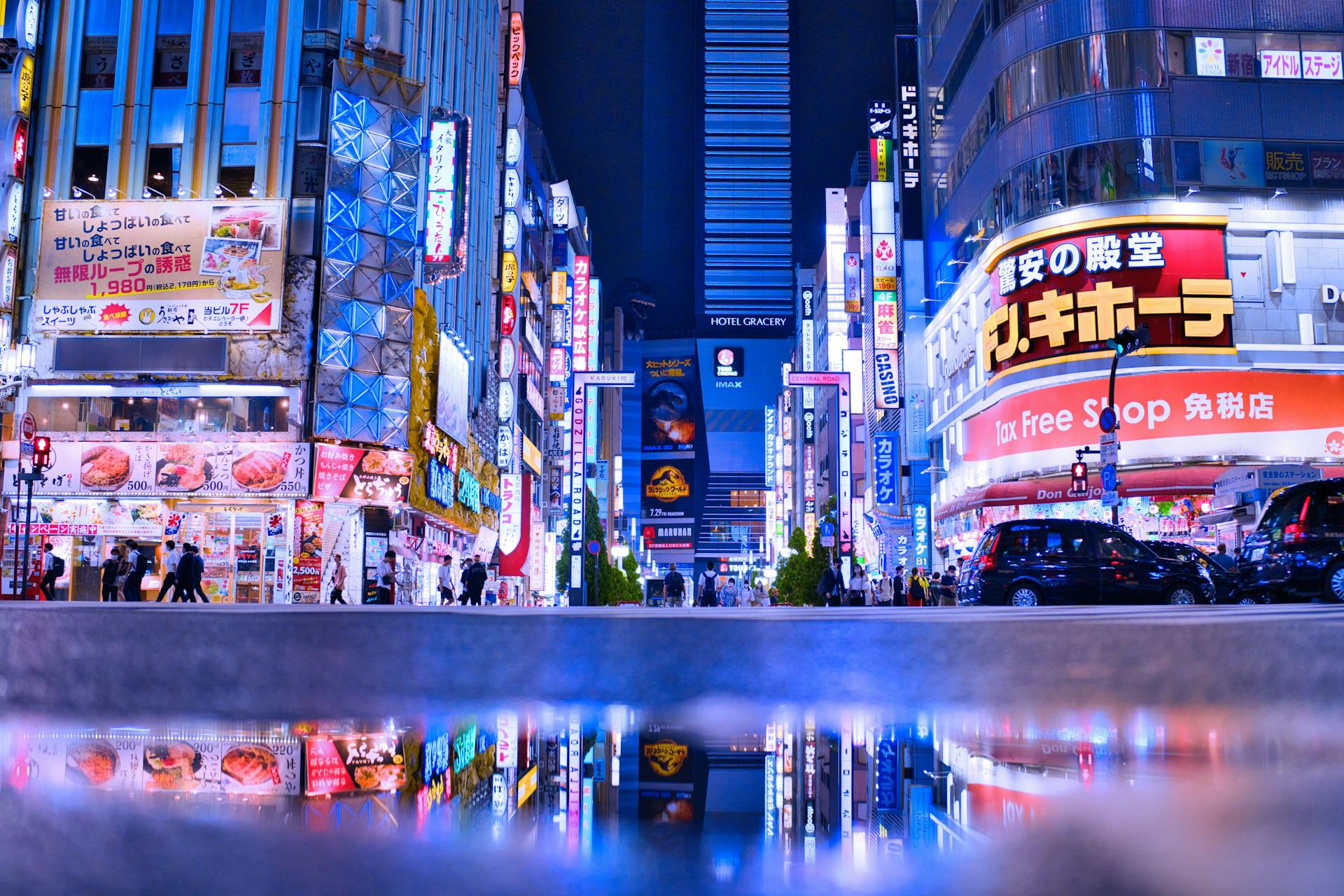
The ¥1,200/month apartment figure from the Reddit 6-month report reflects a 1-bedroom in a residential area of West Tokyo. That is the real number for Tokyo — but Japan has several cities worth considering, each with meaningfully different cost profiles.
| City | 1BR Monthly Rent | Est. Total Monthly Cost | Notes |
|---|---|---|---|
| Tokyo | ¥120,000–¥200,000 | ¥220,000–¥360,000 | Most international community, best English infrastructure |
| Osaka | ¥80,000–¥150,000 | ¥170,000–¥280,000 | ~20% cheaper than Tokyo, excellent food scene |
| Kyoto | ¥70,000–¥130,000 | ¥160,000–¥260,000 | Quieter, limited furnished short-term stock |
| Fukuoka | ¥60,000–¥100,000 | ¥130,000–¥210,000 | Most affordable; growing startup scene, easiest for Korea visa runs |
| Sapporo | ¥50,000–¥90,000 | ¥120,000–¥190,000 | Cheapest option; cold Oct–Apr, thinner international community |
Fukuoka in particular gets underrated in these conversations. It has a dedicated startup visa program, a compact and walkable city centre, and direct flights to Seoul and Taipei. For someone who wants the Japan experience without Tokyo pricing, it is worth serious consideration.
All figures assume eating out 80% of the time (which is how most nomads end up living — restaurant meals in Japan run ¥800–¥1,500 for lunch, ¥1,500–¥3,000 for dinner at a decent local spot).
The Time Zone Problem
This one doesn’t get enough attention in nomad articles. Japan is UTC+9 — no daylight saving time. If your team is in Europe, you are looking at 7–8 hours ahead of CET. That is manageable with an async-first culture and a few late Tuesday calls.
If your team is on the US East Coast, you are 13–14 hours ahead. An 8am standup in New York is 9–10pm in Tokyo. That is workable for a few months if you are disciplined, but plan for it before you go. The nomad who burned out mid-stay almost always underestimated this.
Coworking spaces help here — not just for the timezone sync, but because café working is genuinely limited in Japan. Unlike Bali or Lisbon, most Tokyo cafés have no-laptop policies or time limits. Dedicated coworking (WeWork, Regus, and local options like Fabbit or Basis Point) runs ¥20,000–¥50,000/month for a hot desk in Tokyo. Budget for it.
Is It Worth It? The Honest Verdict
| Digital Nomad Visa | 90-Day Tourist Waiver | |
|---|---|---|
| Stay Duration | 180 days (consecutive) | 90 days per entry |
| Legal Right to Work Remotely | Yes | No (grey area) |
| Paperwork | High — embassy visit + documents | Zero |
| Income Requirement | ¥10M/year | None |
| Residence Card | No | No |
| Re-entry During Stay | Requires multiple-entry visa or permit | Unrestricted |
| Risk if Caught Working | N/A — you’re legal | Deportation, potential multi-year ban |
The 90-day tourist waiver is widely used for remote work, and the odds of being caught are low. But “low risk” is not “no risk.” Japanese immigration officers can and do ask questions, and if you are flagged — especially on a visa run — the consequences are serious. Whether that risk is worth avoiding is your call to make, not mine.
What I’d say is this: if your employer has any compliance requirements around where you’re working from, or if you are the type of person who finds grey-area situations distracting, the DNV is a genuinely clean solution. If you are a freelancer with flexible schedule and no employer to answer to, the 90-day + visa run path may be more practical — just go in clear-eyed about what it actually is.
The visa’s biggest structural flaw is what the visa was designed to be: it is a tourism revenue instrument, not a path to living in Japan. Japan is giving you a place to be, as one observer put it, but not much else. If you are hoping to use 6 months to explore whether Japan is somewhere you want to build a life, the DNV is a useful trial — just know that the trial has an expiry date and no renewal button.
If you want to use Wise while you are in Japan, you can sign up with my link and get either a free card or zero fees on a transfer up to ¥75,000, depending on the offer Wise is showing at the time.
If you want to use Revolut while you are in Japan, you can sign up free with my link. The free Standard plan currently gives you up to ¥25,000/month of ATM withdrawals with no Revolut fee, weekday FX up to ¥300,000/month with no extra fee, free virtual and single-use cards you can manage in-app, and access to cashback offers with selected online merchants in Revolut Shops.
Start with the official source. The MOFA Digital Nomad Visa page has the current eligible country list, required document templates, and the specific health insurance wording your policy needs to match. Requirements have been consistent since launch, but always verify before you commit to anything.
Keep Reading